
You walk out to do your workout at 6 a.m. and the yoga mat is damp, the mirror has a film on it, and there's a faint rust bloom creeping up the bottom of the weight rack. Or maybe you're in the workshop and every tool with exposed metal has a light orange dusting after a rainy week. That's the moment most people notice: the garage stopped being a garage, but the garage door didn't get the memo.
The Door Doesn't Know the Room Changed
A standard garage door is built to keep out rain and hold back wind — not to manage temperature or humidity the way a finished wall does. Most non-insulated doors are basically a sheet of metal with air space behind it. Once you turn that space into a gym, home office, or workshop, you're asking a door designed for "car storage" to behave like an exterior wall of a living space. It usually can't, at least not without help.
Why This Hits Harder Here
Decatur's hot, humid summers and heavy rain push moisture into any gap in the door's weatherstripping. Pollen season coats and clogs the seals along the bottom and sides, which keeps them from closing tight even when the door looks fine. Then an ice storm rolls through in winter and that same door — now one side of a heated or semi-heated room — sweats on the inside as warm air hits the cold metal. That condensation is exactly what's fogging mirrors and rusting equipment.
Three Honest Ways to Settle This
There isn't one right answer — it depends on whether you ever want the space to go back to parking a car.
- Keep the door, insulate it properly. A reflective or foam insulation kit plus new weatherstripping cuts down on condensation and temperature swings while keeping full flexibility to use it as a garage again later. This is the middle-ground option most people land on.
- Replace it with an insulated door. If the original door is old, worn, or was never insulated, swapping it for a proper insulated panel door solves the temperature and moisture problem at the source and usually looks better from the street too.
- Frame it in as a wall. The most permanent option — removes the door problem entirely, but you lose the ability to use the space as a garage again without real construction work. Worth it only if you're sure you'll never want a car back in there.
If the argument at home is "we might sell the house someday," that usually points toward option one or two — most buyers expect a garage to still function as one, even if it's currently a gym.
Signs the Door Is Already Struggling
Even if nobody's framed in a wall, a converted garage puts new strain on the door itself:
- The opener runs louder or slower after an insulation kit was added — the extra weight changes the balance, and the springs may now be working harder than they were set up for.
- Rust spots at the bottom panel or hinges that weren't there before, usually from humidity getting trapped once the space is sealed up more for comfort.
- Weatherstripping that looks intact but doesn't actually seal — pine pollen and grit build up in the track and bottom seal, holding the door slightly open at points you can't see from inside.
- A door that feels heavier to lift manually, which usually means the spring tension was never adjusted after insulation was added.
None of these are cosmetic. A spring carrying more weight than it's rated for wears out faster and can fail without warning, and a door that's not sealing right is feeding the exact humidity problem you're trying to fix.
When to Call Decatur Garage Door Service
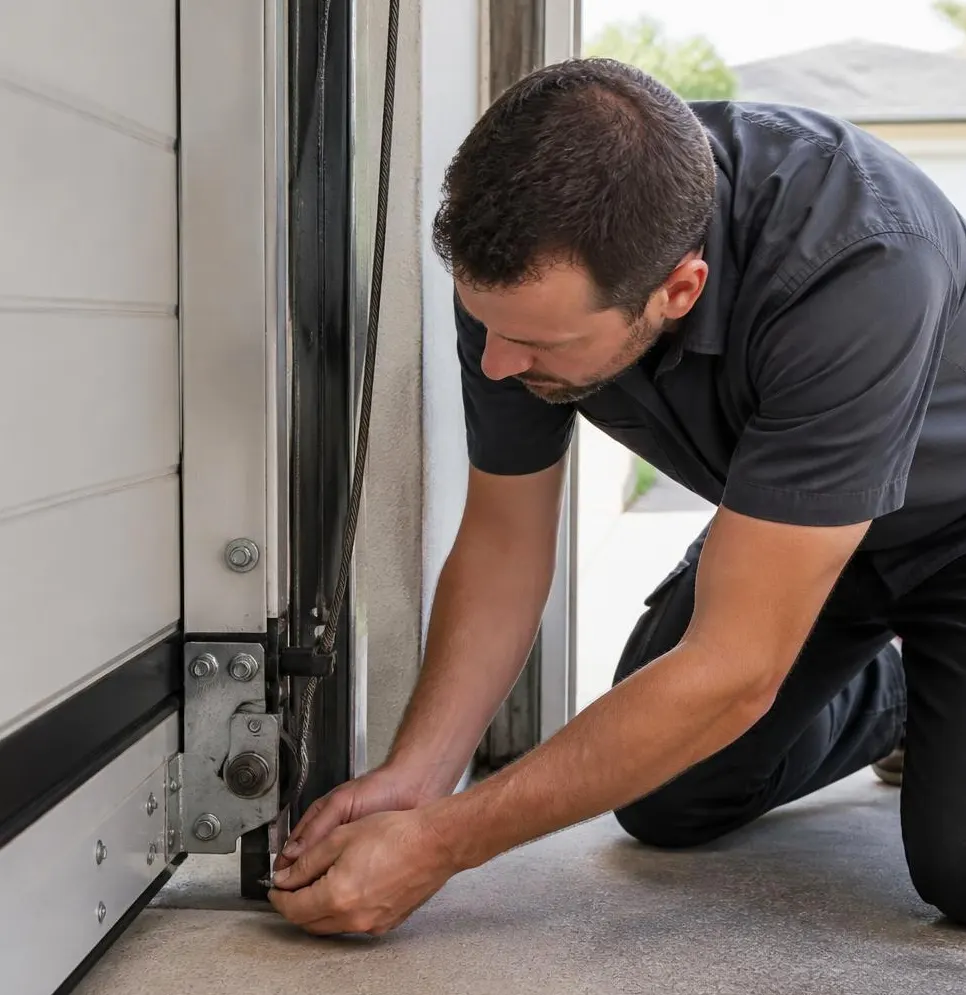
If your converted space has rust, fogging, or a door that suddenly feels off-balance, that's worth a look before it becomes a bigger repair. We handle garage door maintenance to check spring tension and reset weatherstripping after a conversion, and garage door installation if an insulated replacement makes more sense than retrofitting the old one. Either way, we'll tell you straight whether the door needs work or whether the real fix is better sealing and insulation.
If you're mid-argument over what to do with your garage in Decatur, Lithonia, Stone Mountain, or anywhere nearby, give Decatur Garage Door Service a call — we'll look at the door itself and tell you what actually needs to happen, no upsell required.